Supplier Engineering
Supplier Agent Platform
Technical Proof of Concept Review
May 2026 •
Today’s Session
Agenda
1 Architecture
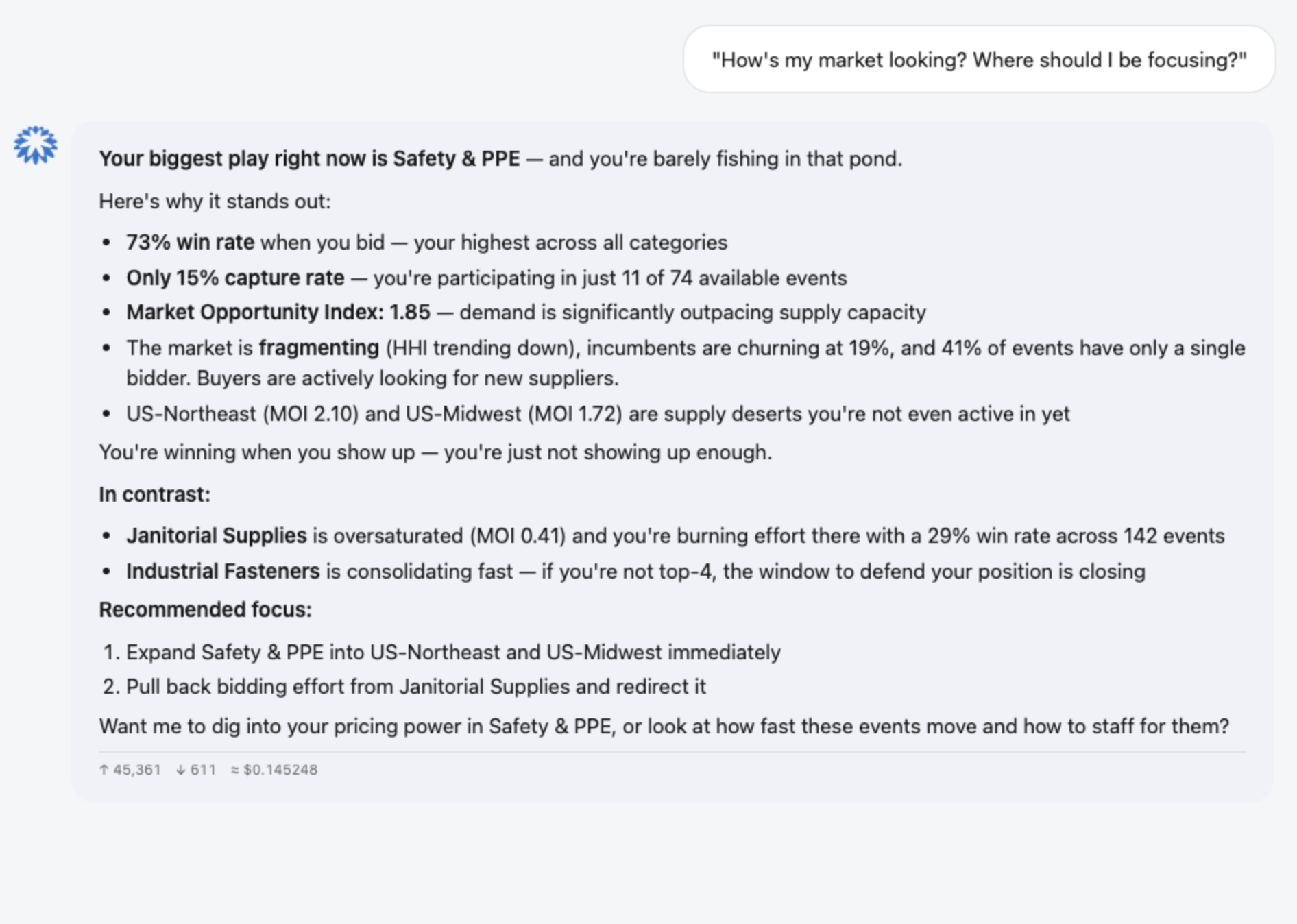
2 Demo
3 Platform
4 Analytics
5 Form Factor
6 Vision & Discussion
Objectives
1
Demonstrate the technical proof of concept
2
Discuss the right way to integrate it for maximum supplier value
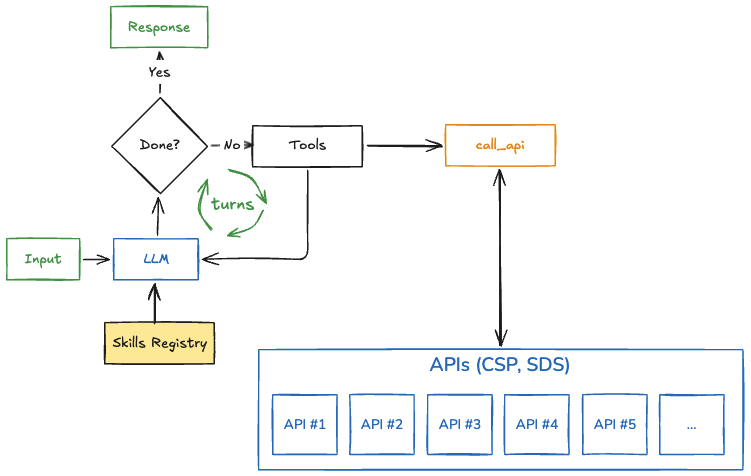
Agent Loop
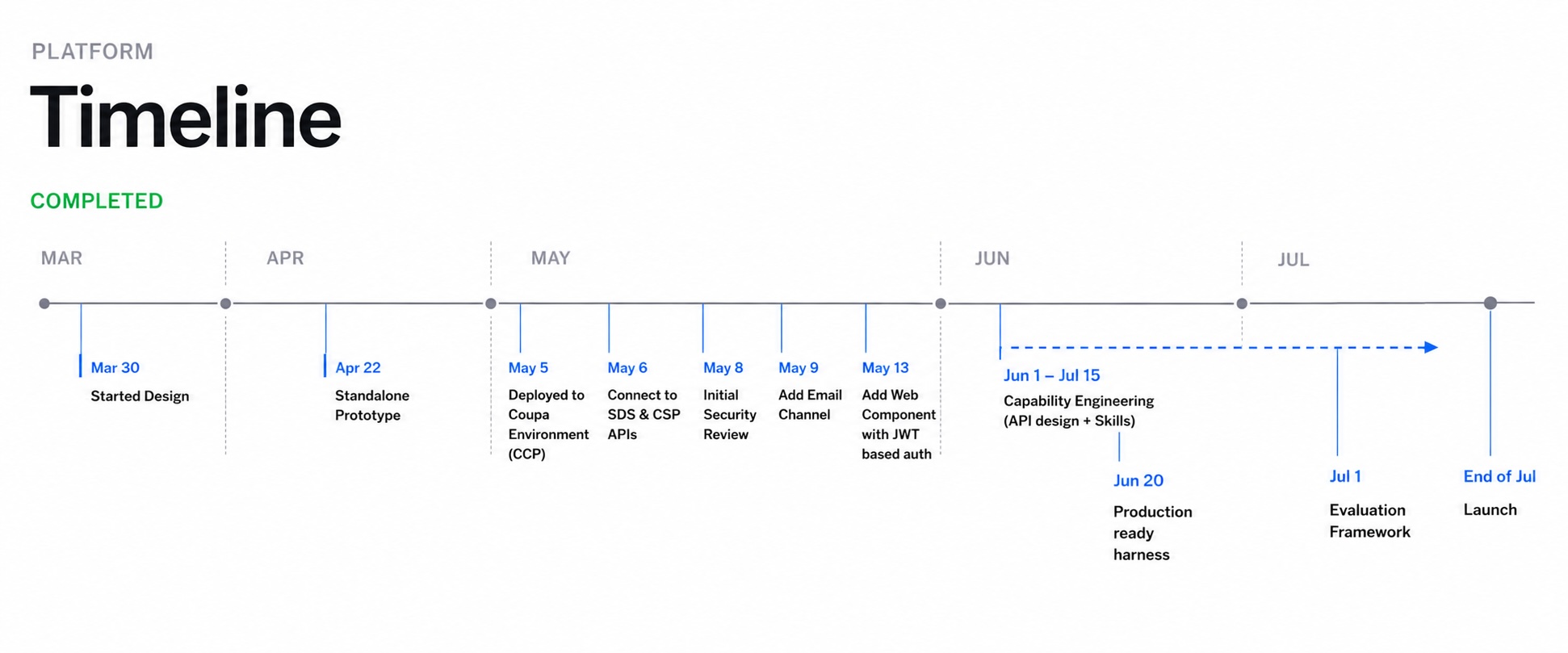
Platform
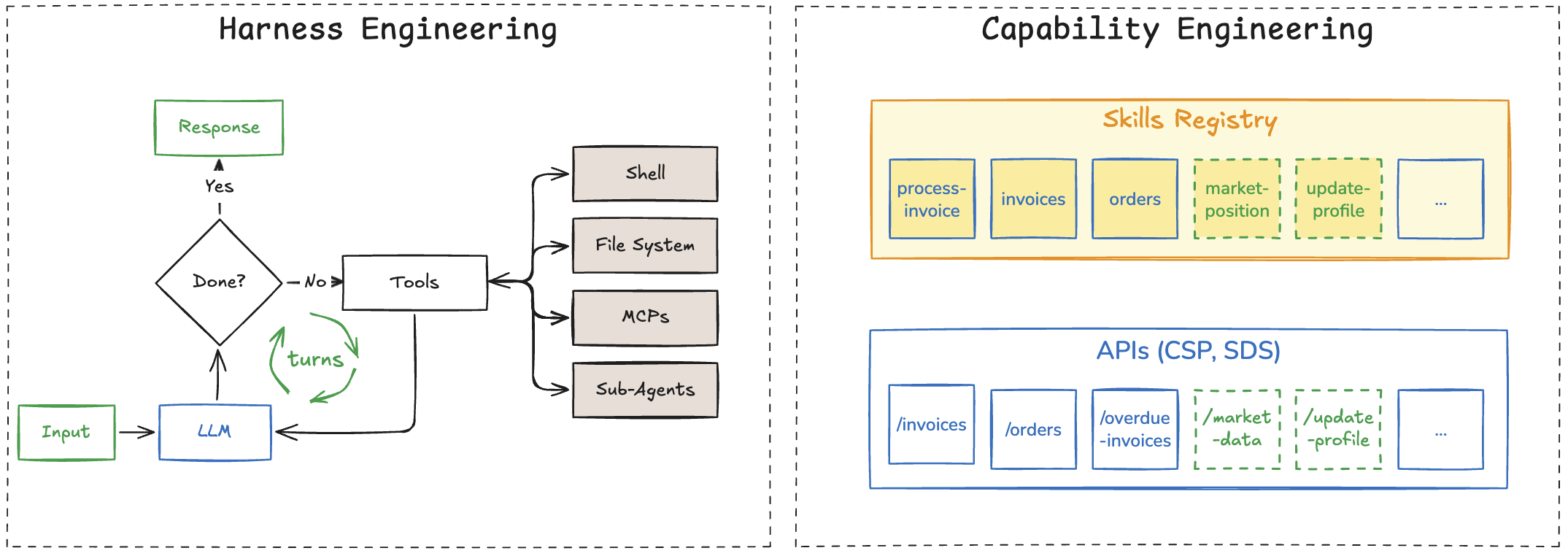
Ship Capabilities Without a Deploy
Skills and API connections configured independent of the core
codebase
Capability development decoupled from software development
New use cases go live as configuration — no release train
required
Platform
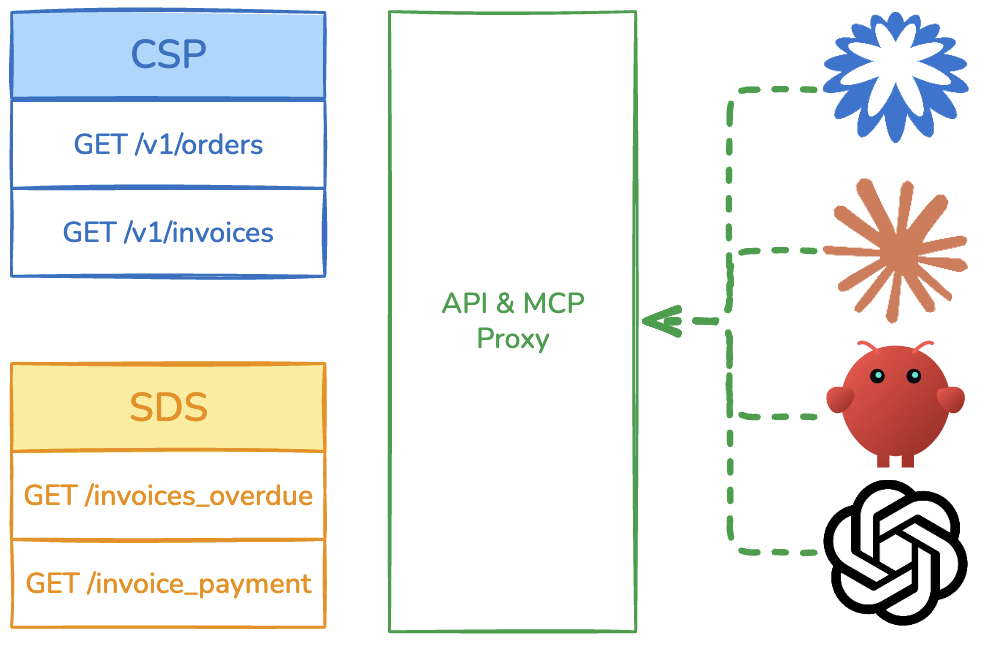
APIs as Agent Interfaces
Unified proxy across CSP, SDS, and Core
Analytics
What are the use cases?
CSP Usage — 60 Day Window
Where Suppliers Spend Time
| Page | % Views | % Time | % Visitors |
|---|---|---|---|
| Orders – Purchase Orders | 23.5% | 21.5% | 60.7% |
| Invoices – Home | 12.7% | 12.6% | 63.9% |
| CSP Home | 10.5% | 8.8% | 68.2% |
| Business Profile – Home | 2.4% | 3.2% | 36.1% |
| Tasks | 2.7% | 2.6% | 39.4% |
| Orders – Order Lines | 2.5% | 2.2% | 19.8% |
| Info Requests (Profile) | 1.8% | 2.1% | 18.0% |
| Security – MFA | 1.8% | 1.7% | 20.4% |
| Private Sourcing Events | 1.1% | 1.7% | 6.8% |
| Invoice Lines | 1.2% | 1.1% | 17.5% |
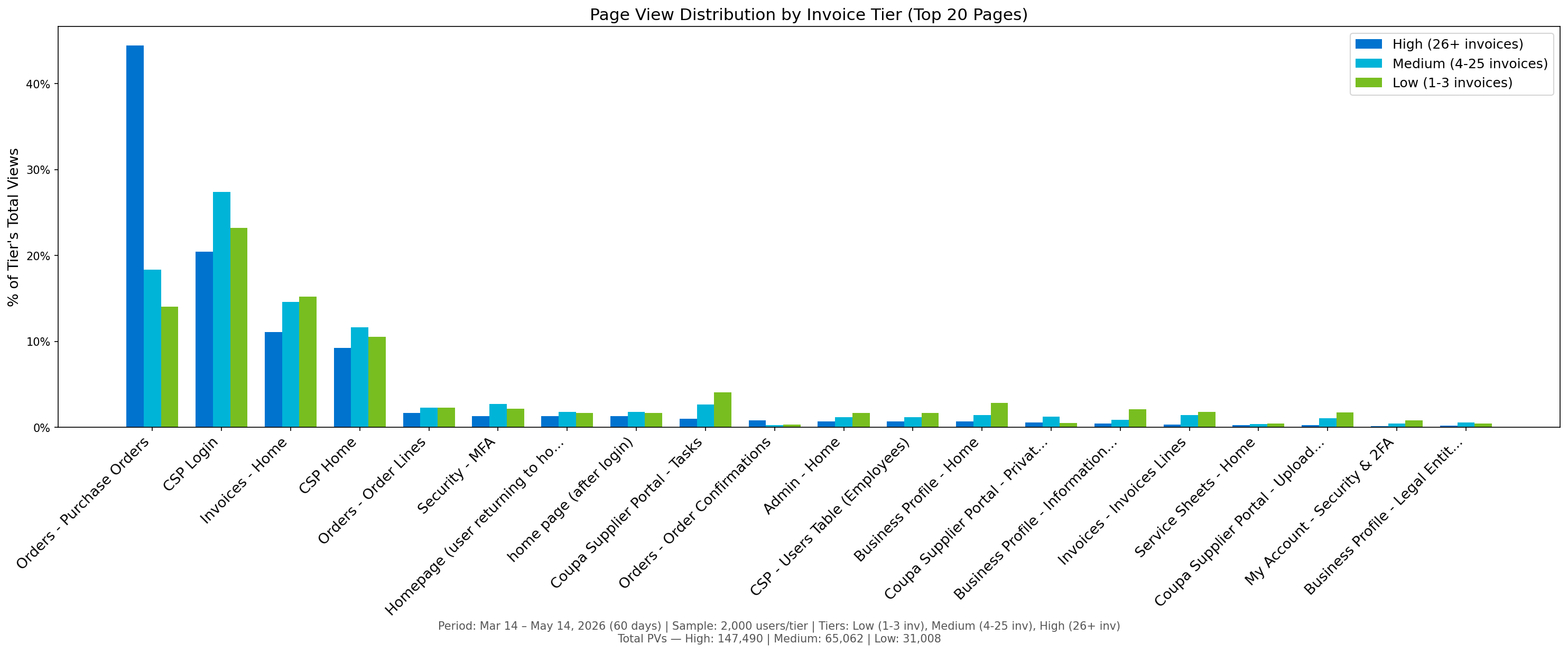
CSP Usage by Invoice Tier
Page Views by Supplier Segment
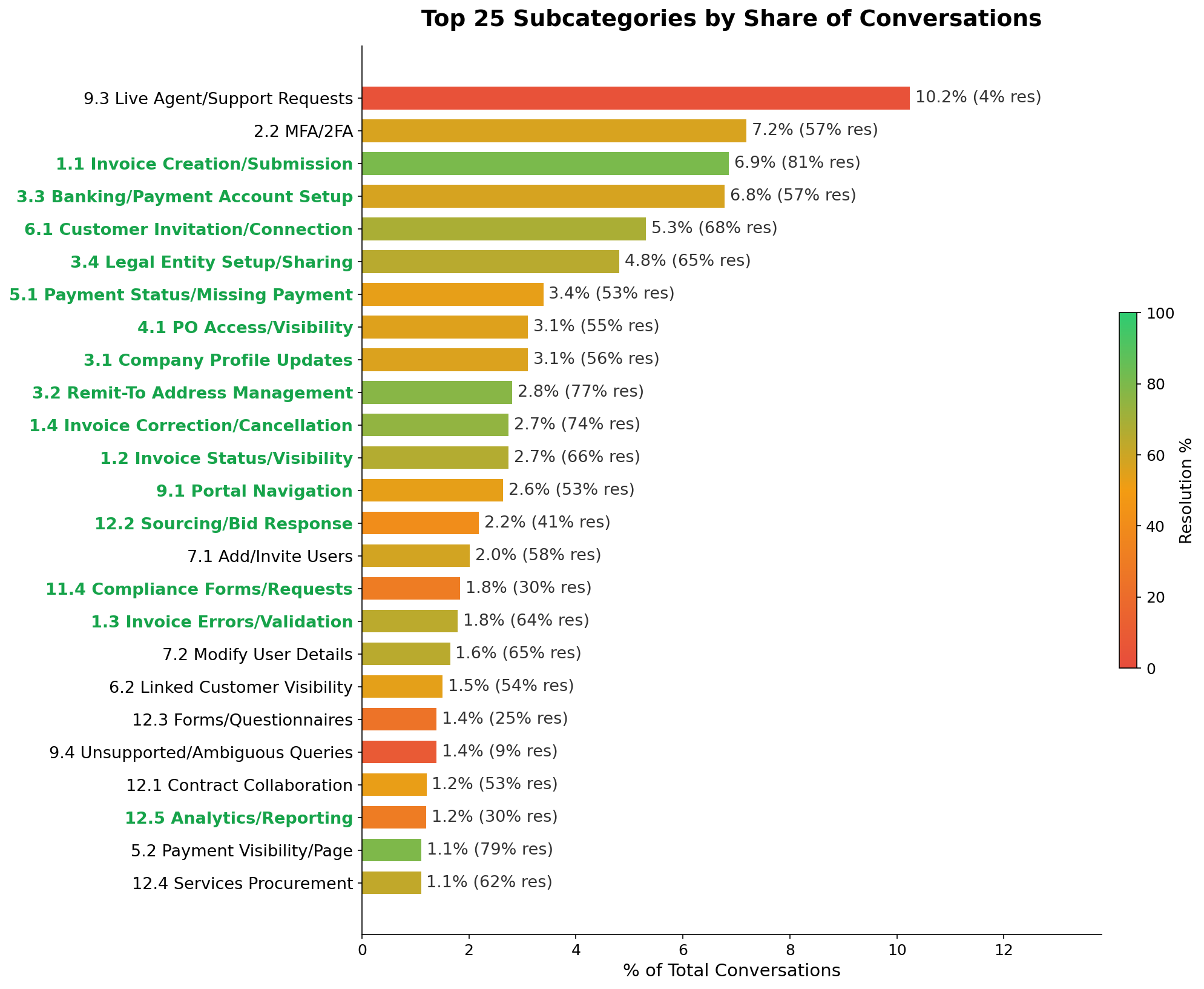
What Suppliers Ask For Help With
10,850 conversations • Red = low resolution
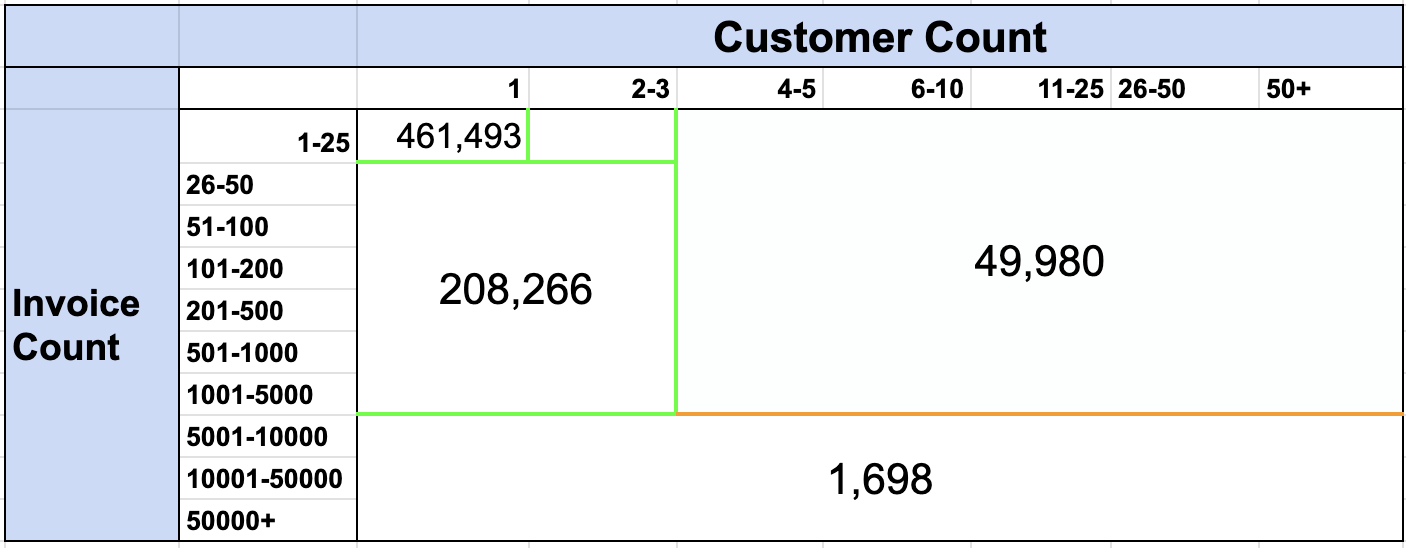
What suppliers could get value from a general agent?
Cost
LLM Cost at Scale
Advanced Subscribers — paid tier with chatbot access
Assumptions
$0.05–$0.10 per message
5 messages per conversation
= $0.25–$0.50 per conversation
| Advanced Subscribers | 10 conv/mo | 20 conv/mo | 40 conv/mo |
|---|---|---|---|
| Annual Cost / Subscriber | $30–$60 | $60–$120 | $120–$240 |
| 500 (current) | $1,250–$2,500 | $2,500–$5,000 | $5,000–$10,000 |
| 1,000 | $2,500–$5,000 | $5,000–$10,000 | $10,000–$20,000 |
| 2,500 | $6,250–$12,500 | $12,500–$25,000 | $25,000–$50,000 |
| 5,000 | $12,500–$25,000 | $25,000–$50,000 | $50,000–$100,000 |
Vision & Ideation
What does a general, always-on supplier agent enable?
Form Factor
Dynamic Canvas
The stage expands contextually with charts, tables, or scorecards based on what the supplier asks.
Cash Flow
Uninvoiced POs
Buyer Scorecard
Form Factor
Three Ways Suppliers Interact
- Authenticated by supplier email address
- Submit invoices and documents
- Fetch data and analytics on demand
CSP
- Dynamic canvas with contextual UI
- Rich experience with full supplier & AR capabilities
- Higher stakes “human-in-the-loop” use cases
Ambient
- Proactive alerts on overdue invoices
- Pre-fill PO acknowledgments and draft responses
- Surface payment discrepancies automatically
Next Steps
What’s Needed to Move Forward
Capability Engineering Domain-specific use cases — requires PM engagement to
define and prioritize
API Development Purpose-built, agent-first APIs across CSP and SDS
UI/UX Design Best form factor within CSP — dynamic canvas vs.
alternative engagement approaches